Evidence-Based Practice
Evidence-based practice (EBP) provides the foundation for the evaluation of practice and the commitment to scientific inquiry. The goal is to advance nursing practice individually and collectively.
Evidence-based practice is a problem-solving approach to how healthcare is delivered that integrates the best evidence from high-quality studies with a clinician’s expertise and also a patient’s preferences and values (Melnyk & Fineout-Overholt, 2015). Evidence-based practice is described as a 7-step process:
- Cultivate a spirit of inquiry and EBP culture.
- Ask the PICO(T) question.
- Search for the best evidence.
- Critically appraise the evidence.
- Integrate the evidence with your clinical expertise and patient preferences to make the best clinical decision.
- Evaluate the outcome(s) of the EBP practice change.
- Disseminate the outcome(s).
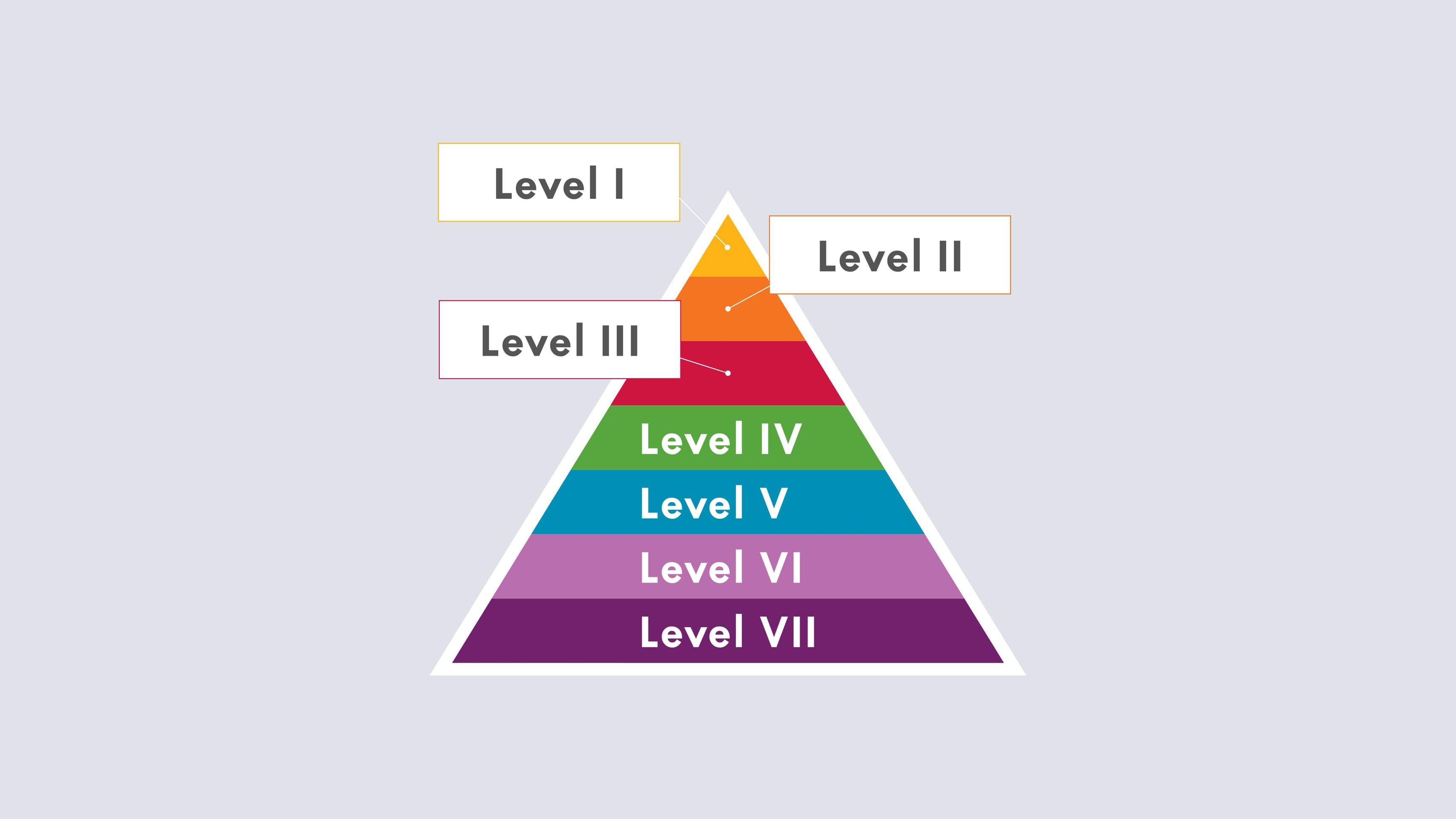
Evidence Pyramid
Adapted from © Copyright 2011-2018, Lynn Gallagher-Ford; The Helene Fuld Health Trust National Institute for Evidence-based Practice; Melynk & Fineout-Overholt, Evidence-based practice in nursing and healthcare. (p.11), Wolters Kluwer Health, 2015.
The Evidence Pyramid (from top to bottom):
- Systematic reviews and meta-analysis of RCTs.
- Randomized controlled trials(RCTs).
- Controlled trial without randomization.
- Case-control and cohort study.
- Systematic review or meta-synthesis of descriptive or qualitative studies.
- Descriptive or qualitative study, clinical practice guideline, literature review, QI, or EBP project.
- Expert opinion.
Evidence-Based Practice & Research Conference
Share new research, evidence based practice implementation and new innovations focused on eliminating preventable harm to patients across the healthcare continuum. Open to all healthcare professionals, our conference grants a seven (7) contact hour CE certificate upon completion.